Hardness range
Grades from soft, conformable seals to hard, near-rigid back-up rings and wear components, typically 70 Shore A to 75 Shore D.
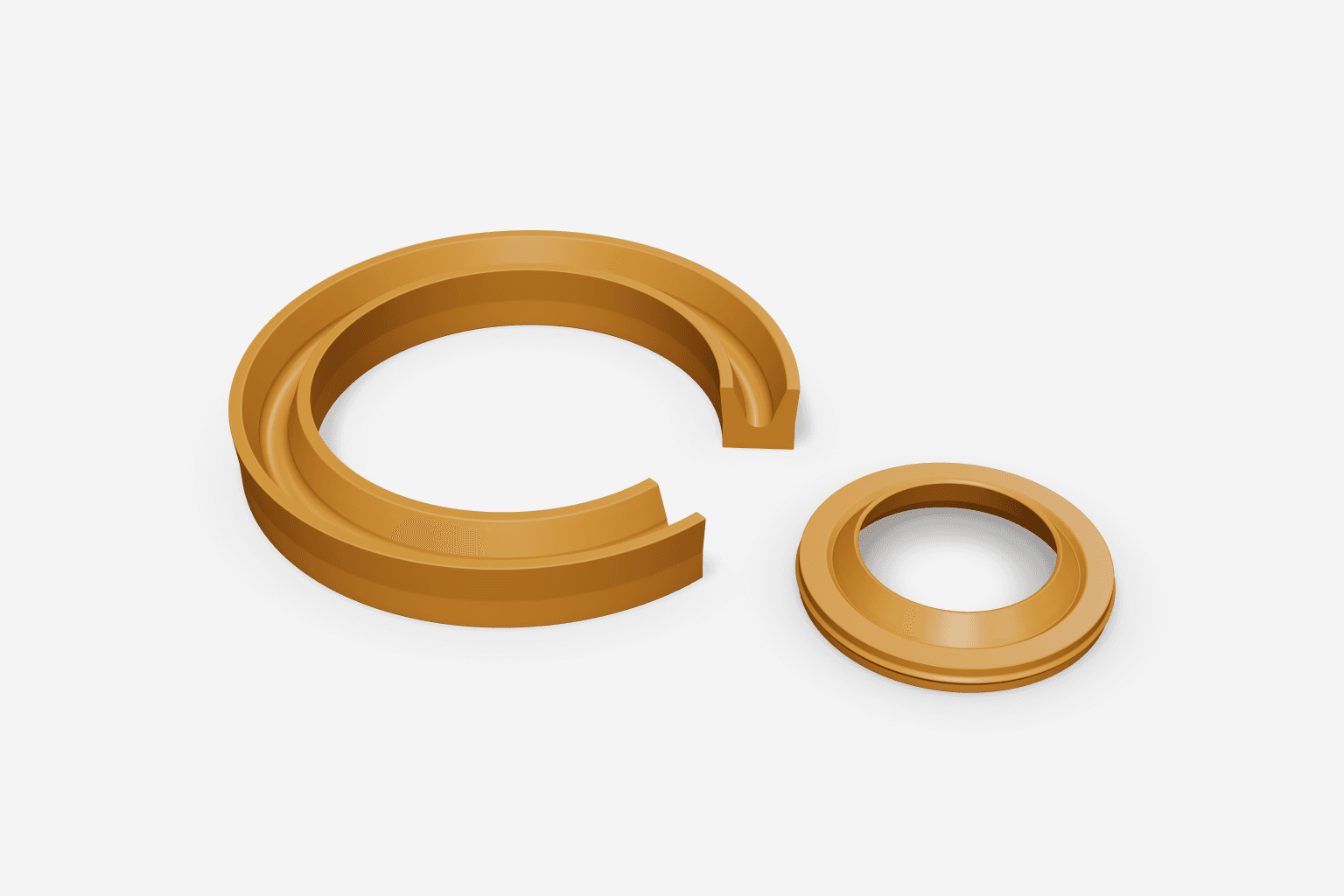
Moss Seal supplies polyurethane seals and molded components for applications where standard elastomers wear, extrude, or tear too quickly. Polyurethane combines the elasticity of rubber with the toughness and abrasion resistance of engineering plastics, making it the material of choice for hydraulic rod and piston seals, wipers, back-up rings, pump components, and custom parts exposed to grit, high pressure, or impact. We select the grade and hardness to match your pressure, speed, temperature, and fluid, from cast urethane for large or custom parts to precision-molded seals for high-volume use.
ENGINEERING
Polyurethane's segmented molecular structure gives it a rare combination: high tensile strength and tear resistance with the elastic recovery needed to seal.
Compared with nitrile, polyurethane offers several times the abrasion resistance, higher tensile strength, and far better extrusion resistance at the same hardness. This lets seals run at higher pressures with larger clearances and survive contaminated or abrasive media.
The material's toughness allows sharp, durable sealing edges that resist nibbling and cutting, while its resilience maintains contact under pressure cycling. Hydrolysis-resistant grades extend service in water-based fluids and humid environments.
Polyurethane excels in hydraulic cylinders, mobile and construction equipment, mining and drilling tools, pumps handling abrasive slurries, and any application where wear life drives maintenance cost. For very high temperatures or aggressive chemicals, we pair it with or substitute PTFE, FKM, or other compounds.
SELECTION
Outstanding abrasion resistance · High tensile and tear strength · Excellent extrusion resistance · Good low-temperature flexibility · Resists oils, greases, and many hydraulic fluids · Custom shapes and hardnesses to drawing