HNBR
Better heat and sour gas resistance than standard nitrile for wellhead and valve service.
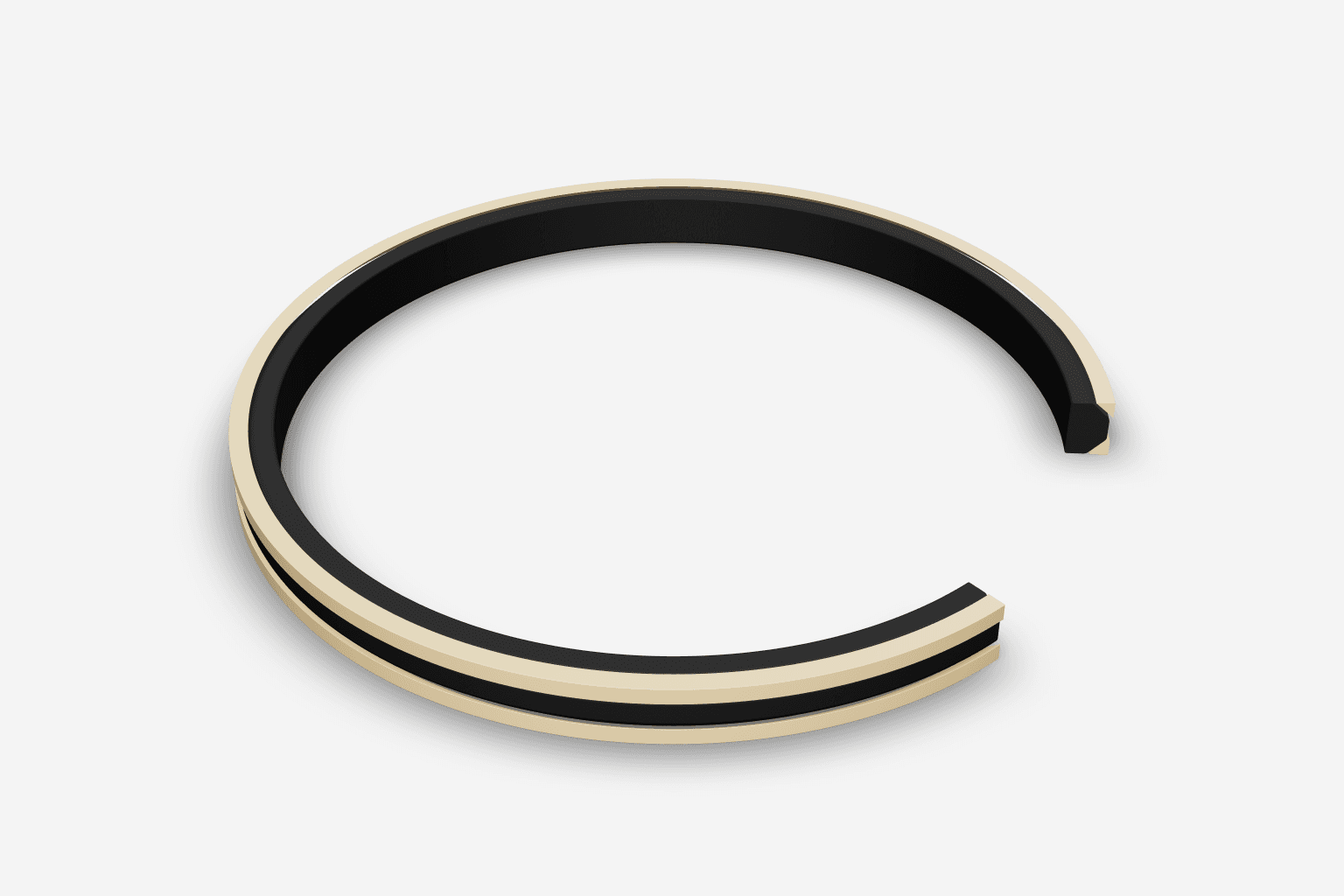
Moss Seal bonnet seals provide a reliable static seal between the valve body and bonnet in gate valves, ball valves, and wellhead equipment. Engineered to hold under high pressure, thermal cycling, and aggressive well fluids, they keep the pressure boundary tight through repeated make-up and service intervals. We match profile, material, and backup configuration to your valve design and operating conditions, with custom sizes available for new builds and repair programs.
ENGINEERING
The bonnet seal sits in a machined gland at the body-to-bonnet joint. As bolts are torqued and system pressure rises, the seal is compressed and energized against both sealing surfaces, closing the leak path at the valve's primary pressure boundary.
Available in elastomeric, thermoplastic, and composite profiles, including O-ring, lip, spring-energized, and anti-extrusion backed designs. Each profile is selected for the gland geometry, bolt load, and pressure class of the valve.
Initial compression during bonnet make-up creates a low-pressure seal. As line pressure increases, it pushes the seal harder against the gland walls, increasing contact stress in proportion to pressure. Backup rings prevent extrusion into the clearance gap at high differentials.
The seal maintains contact through pressure spikes, thermal expansion, and cooldown cycles that can loosen a joint over time. Material selection accounts for compression set, chemical exposure, and rapid gas decompression so the seal holds through long service intervals.
SELECTION
Pressure-energized sealing · Seals at low pressure · Resists extrusion · Holds through thermal cycling · Handles aggressive well fluids · Long service intervals