
Aerospace
The aerospace industry covers the design, manufacture, and operation of aircraft, spacecraft, launch vehicles, and defense platforms. Every system on board, fuel, hydraulics, environmental control, propulsion, depends on seals that hold through extreme temperature, pressure, and vibration.
Aerospace Solutions
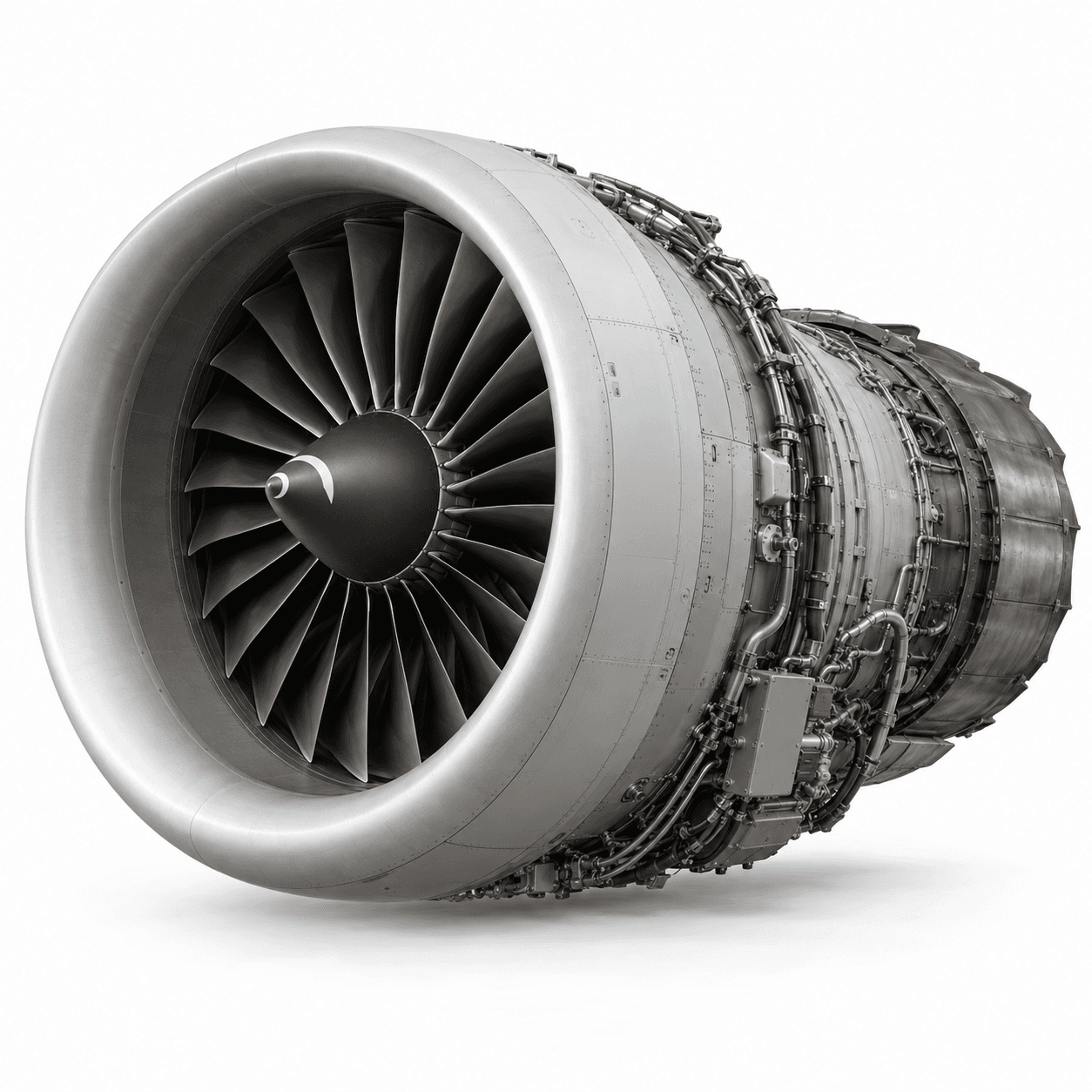
Aerospace platforms are unforgiving of failure. Typical systems include hydraulic actuators, fuel systems, landing gear, engine and APU components, environmental control, cryogenic lines, and flight instrumentation. Much of this equipment cycles from ground ambient to altitude or orbit and must perform on the first attempt, every time.
Sealing
Operations
Aerospace systems are highly weight- and reliability-sensitive. Seals must meet AS/MIL specifications, tight tolerances, and full traceability while surviving thermal shock, rapid pressure change, aggressive fuels and hydraulic fluids, and long service intervals with no access for maintenance.
Specifications and traceability
Aerospace seals are ordered to AS, MIL and SAE standards, not by nominal size alone. We supply to the specified standard with material certifications and lot traceability, so a seal can be traced from raw compound to installed part.
Temperature and fluid resistance
One airframe can expose seals to cryogenic lines, engine-bay heat, jet fuel and phosphate-ester hydraulic fluid. Compound choice matters: fluorosilicone and FKM for fuels and lubricants, EPDM for phosphate-ester hydraulics, and PTFE or PEEK where temperature or chemistry rules out elastomers.
Weight, friction and service life
Flight hardware is sized for weight and reliability, so seals use compact cross-sections and tight tolerances. Spring-energized and PTFE designs keep breakaway friction low on actuators and landing gear, and hold their seal through long service intervals with no access for maintenance.